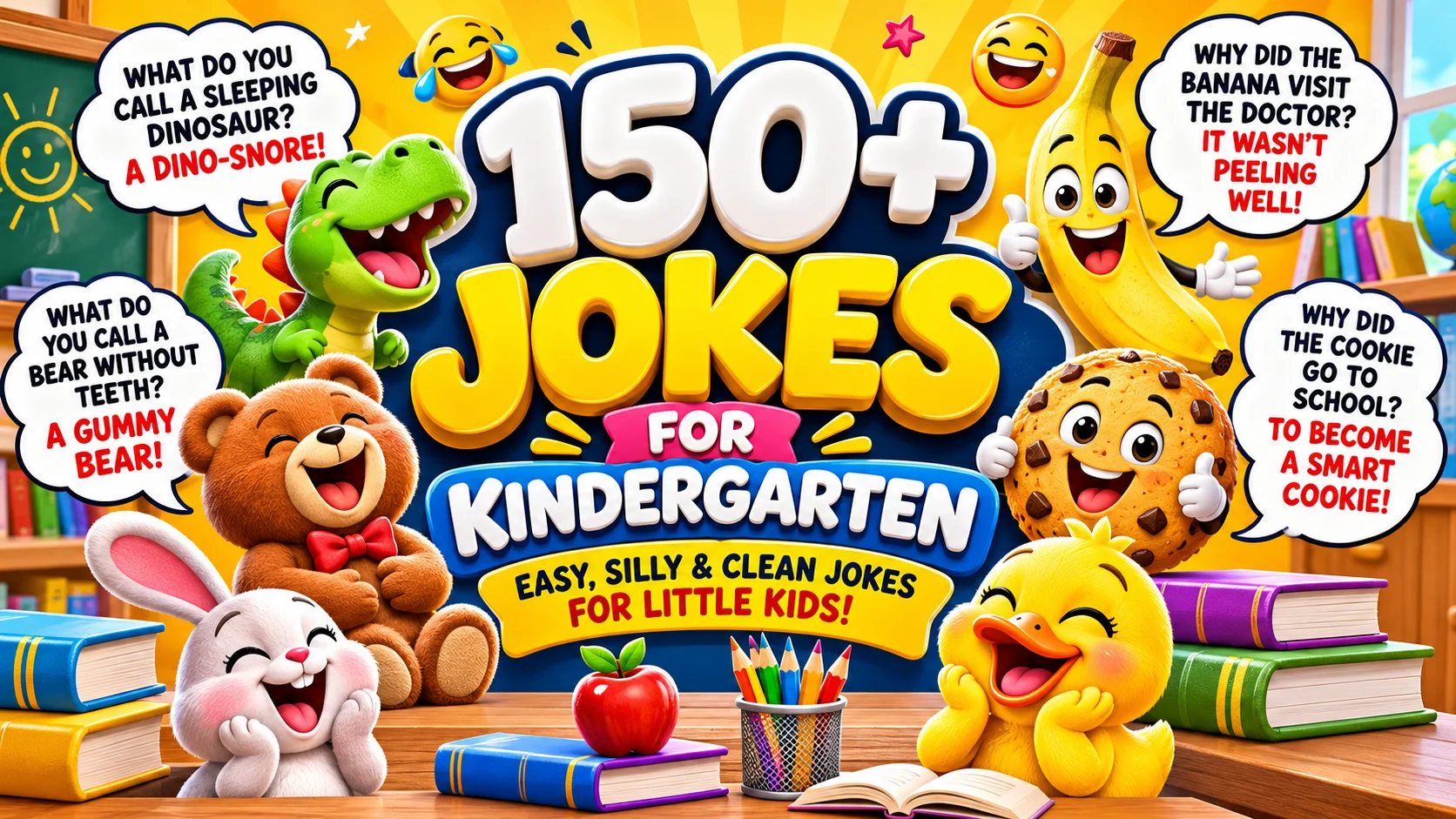
Kindergarten is a wonderful time for discovering new words, making friends, exploring the world, and learning through play. And what makes those little learning adventures even more enjoyable? A good joke! Young children love silly questions, funny animal stories, surprising answers, and playful words that make them giggle. A simple joke can turn a quiet classroom into a cheerful place and give children a fun way to communicate with one another.
This collection of jokes for kindergarten is designed for little learners who enjoy clean, easy-to-understand humor. It includes short jokes, funny questions, knock-knock jokes, animal jokes, simple riddles, and special jokes for holidays such as Easter, Christmas, and Halloween. Parents, kindergarten teachers, and caregivers can use these jokes during circle time, classroom activities, lunch breaks, or family conversations.
Funny Jokes for Kindergarten That Make Little Kids Giggle
Kindergarten jokes work best when they have familiar characters, simple words, and unexpected answers. Children at this age are learning how language works, so jokes involving animals, food, toys, and everyday objects can be especially entertaining. A funny punchline also gives them a chance to practice listening and understanding the connection between a question and its answer.
The following jokes are short and playful enough for young children to remember. Teachers can read them aloud during morning meetings, while parents can share them during breakfast or bedtime. Encourage children to repeat their favorites and explain which part made them laugh.
- Why did the teddy bear say no to dessert? Because it was already stuffed!
- What do you call a sleeping dinosaur? A dino-snore!
- Why did the banana visit the doctor? It wasn’t peeling well!
- What did one wall say to the other wall? I’ll meet you at the corner!
- Why did the cookie go to school? It wanted to become a smart cookie!
- What do you call a bear without teeth? A gummy bear!
- Why did the pencil smile? It had a good point!
- What did the ocean say to the beach? Nothing, it just waved!
- Why did the little star go to school? It wanted to shine brighter!
- What kind of tree fits in your hand? A palm tree!
- Why did the orange stop rolling? It ran out of juice!
- What do you call a funny rabbit? A funny bunny!
- Why did the duck bring a suitcase? It was going on a quack-cation!
- What did the flower say to its friend? Hey, bud!
- Why did the little fish blush? It saw the ocean’s bottom!
- What do you call cheese that isn’t yours? Nacho cheese!
- Why did the crayon go to school? It wanted to draw attention!
- What does a cloud wear under its clothes? Thunderwear!
- Why was the broom happy? It had swept away its worries!
- What did the little bee say after a joke? That was un-bee-lievable!
Easy Jokes for Kindergarten Students to Tell Their Friends
Children love being the person who makes everyone laugh. Easy jokes give kindergarten students a chance to speak confidently, remember short sentences, and enjoy playful conversations with their classmates. They do not need difficult vocabulary or complicated stories to understand a funny punchline.
These jokes use familiar situations and simple wordplay. Children can practice telling them with a friend, share them during classroom circle time, or choose one as their joke of the day. A little encouragement can make even a shy child excited to tell a joke.
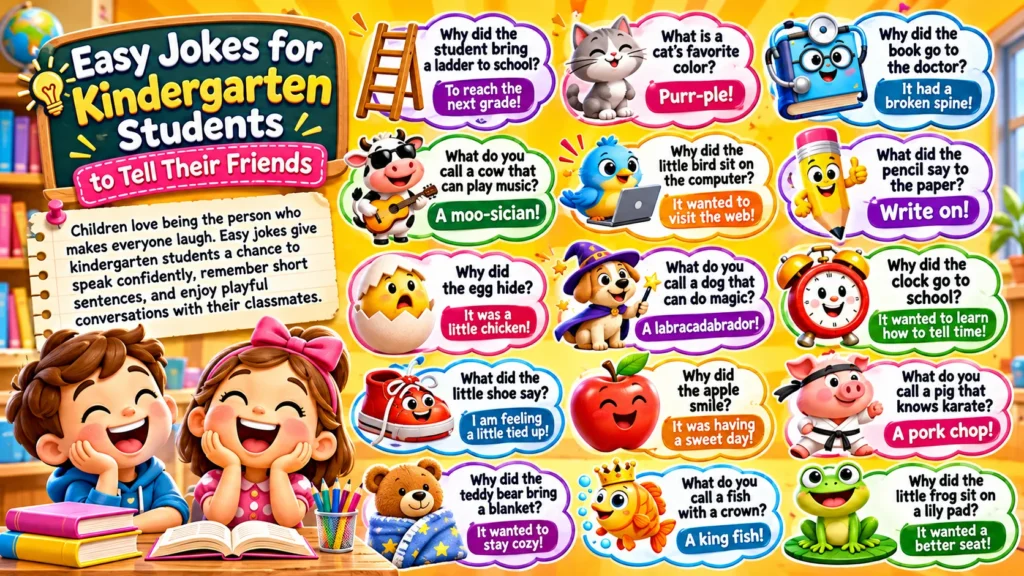
- Why did the student bring a ladder to school? To reach the next grade!
- What is a cat’s favorite color? Purr-ple!
- Why did the book go to the doctor? It had a broken spine!
- What do you call a cow that can play music? A moo-sician!
- Why did the little bird sit on the computer? It wanted to visit the web!
- What did the pencil say to the paper? Write on!
- Why did the egg hide? It was a little chicken!
- What do you call a dog that can do magic? A labracadabrador!
- Why did the clock go to school? It wanted to learn how to tell time!
- What did the little shoe say? I am feeling a little tied up!
- Why did the apple smile? It was having a sweet day!
- What do you call a pig that knows karate? A pork chop!
- Why did the teddy bear bring a blanket? It wanted to stay cozy!
- What do you call a fish with a crown? A king fish!
- Why did the little frog sit on a lily pad? It wanted a better seat!
Joke of the Day for Kindergarten: Quick Laughs for Every Morning
A joke of the day is a simple classroom activity that can make the beginning of the school day more exciting. Teachers can write one joke on the board, read it aloud, and give children a few moments to guess the answer. It creates a friendly routine and gives students something cheerful to look forward to.
Parents can also make this a daily family activity by sharing one joke at breakfast or before school. The jokes below are short enough to use throughout the week, and their simple punchlines are suitable for young learners.
- Why did the chicken cross the playground? To get to the other slide!
- What do you call a sleeping bull? A bulldozer!
- Why did the little cloud stay home? It was feeling under the weather!
- What has four wheels and flies? A garbage truck!
- Why did the mushroom get invited to the party? Because it was a fungi!
- What do bees use to brush their hair? Honeycombs!
- Why did the tomato turn red? It saw the salad dressing!
- What do you call a dinosaur that is sleeping? A dino-snore!
- Why did the duck get a good grade? It was at the top of its quack!
- What has ears but cannot hear? A cornfield!
- Why did the little robot go to school? To improve its byte-sized brain!
- What do you call a happy cowboy? A jolly rancher!
- Why did the computer sneeze? It had a virus!
- What did the zero say to the eight? Nice belt!
- Why did the student eat the homework? The teacher said it was a piece of cake!
Jump into Other Related Article
- Butcher Jokes | Funny Butcher Puns, Steak One-Liners, and Meaty Dad Jokes
- Caesar Salad Jokes | Funny Lettuce Puns, Chicken Salad Laughs, and Julius Caesar Wordplay
- Broccoli Jokes | Funny Vegetable Puns, Dad Jokes, and the Famous Harrison Ford Joke
Funny Animal Jokes for Kindergarten Kids
Animals are wonderful characters for children’s jokes because little learners already know their sounds, movements, and appearances. A cow says moo, a duck says quack, and a dog barks. Turning these familiar details into funny questions helps children connect humor with things they see every day.
Animal jokes can also inspire classroom conversations about pets, wildlife, and different creatures. After telling a joke, ask children to name the animal, imitate its sound, or invent another funny question about it.
Silly Farm Animal Jokes
- What do cows read in the morning? The moos-paper!
- Why did the sheep go to the barber? It needed a baa-rber!
- What do you call a sleeping horse? A snooze-horse!
- Why did the chicken join the band? It had the drumsticks!
- What do baby cows drink? Moo-lk!
- Why did the pig sit in the sun? It wanted to become a hot hog!
- What do ducks eat for lunch? Quackers!
- What do you call a cow with no legs? Ground beef!
- Why did the goat climb the mountain? It wanted to reach the top of the hill!
- What do you call a cow that tells jokes? A laughing moo!
Funny Pet and Wild Animal Jokes
- Why did the cat sit on the computer? It wanted to watch the mouse!
- What do dogs eat for breakfast? Woofles!
- Why did the elephant bring a suitcase? It was going on a trunk trip!
- What do you call a bear in the rain? A drizzly bear!
- Why did the owl get invited to the party? Because it was a hoot!
- What do you call a rabbit who tells jokes? A funny hare!
- Why did the turtle cross the road? To get to the shell station!
- What do you call a lion who likes to sleep? A nap-king!
- Why did the penguin carry a backpack? It was going to school in the coolest way!
- What is a frog’s favorite drink? Croak-a-cola!
Knock-Knock Jokes for Kindergarten
Knock-knock jokes are especially fun for kindergarten students because children can join in by repeating the same questions and guessing the punchline. Their familiar pattern makes them easy to remember, even for children who are just beginning to tell jokes independently.
Teachers can use these jokes as a group activity, with one child asking the opening question and the rest of the class answering together. Parents can also take turns with their children during playtime. Keep the delivery playful and allow children to enjoy the silly answers.
– Knock, knock.
Who’s there?
Boo.
Boo who?
Don’t cry! It’s just a funny joke!
– Knock, knock.
Who’s there?
Cow says.
Cow says who?
No, a cow says moo!
– Knock, knock.
Who’s there?
Lettuce.
Lettuce who?
Lettuce in; it’s cold outside!
– Knock, knock.
Who’s there?
Bee.
Bee who?
Bee happy and smile!
– Knock, knock.
Who’s there?
Olive.
Olive who?
Olive you!
– Knock, knock.
Who’s there?
Duck.
Duck who?
Duck down, here comes a joke!
– Knock, knock.
Who’s there?
Tank.
Tank who?
You’re welcome!
– Knock, knock.
Who’s there?
Harry.
Harry who?
Harry up and open the door!
– Knock, knock.
Who’s there?
Orange.
Orange who?
Orange you glad I told you a joke?
– Knock, knock.
Who’s there?
Banana.
Banana who?
Banana split, and I’m off to play!
Easy Jokes and Riddles for Kindergarten Learning Time
Riddles give children a chance to think before they hear the answer. They encourage curiosity and help young learners notice details about familiar objects. A simple question such as “What has hands but cannot clap?” invites children to imagine different possibilities before discovering that the answer is a clock.
These easy jokes and riddles can be used during circle time, story time, or short classroom breaks. Read each question slowly, let children guess, and then reveal the answer. The goal is to enjoy the thinking process rather than get every answer correct.
- What has hands but cannot clap? A clock!
- What has a neck but no head? A bottle!
- What has teeth but cannot bite? A comb!
- What gets wetter while drying? A towel!
- What has keys but cannot open a door? A piano!
- What has one eye but cannot see? A needle!
- What has legs but cannot walk? A table!
- What can you catch but cannot throw? A cold!
- What has pages but is not a tree? A book!
- What has a face but no eyes, nose, or mouth? A clock!
- What goes up but never comes down? Your age!
- What has a ring but no finger? A telephone!
- What has four legs and a seat but cannot walk? A chair!
- What can run but never walk? Water!
- What has a head and a tail but no body? A coin!
April Fools Jokes for Kindergarten Students
April Fools’ Day is a chance to enjoy harmless surprises and silly jokes. For kindergarten children, the best April Fools’ jokes are simple, gentle, and easy to understand. They should create laughter without frightening anyone, damaging belongings, or making a child feel embarrassed.
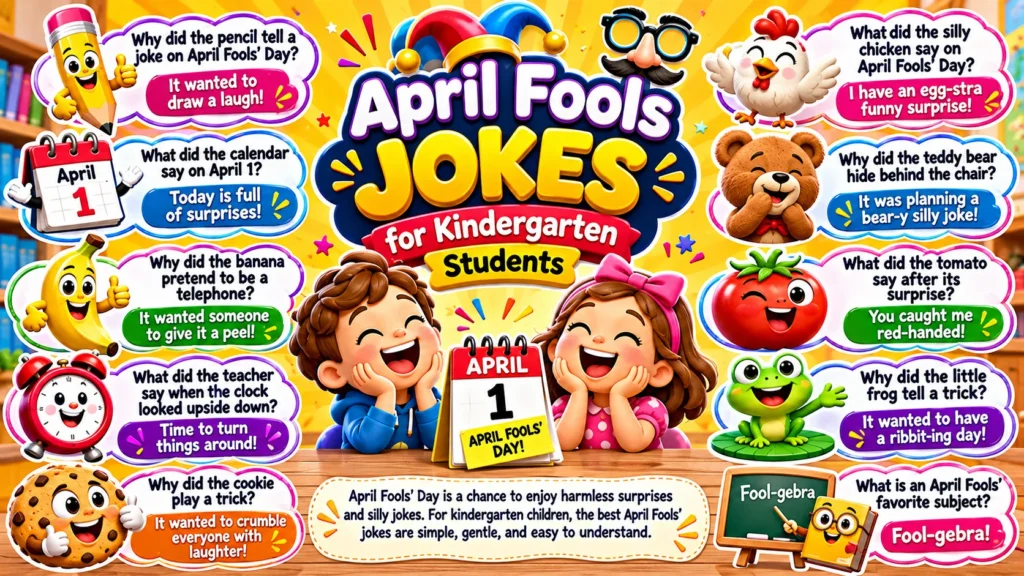
Teachers and parents can use pretend surprises, funny questions, and playful word tricks. The following jokes are suitable for a cheerful classroom activity or a little family fun on April 1.
- Why did the pencil tell a joke on April Fools’ Day? It wanted to draw a laugh!
- What did the calendar say on April 1? Today is full of surprises!
- Why did the banana pretend to be a telephone? It wanted someone to give it a peel!
- What did the teacher say when the clock looked upside down? Time to turn things around!
- Why did the cookie play a trick? It wanted to crumble everyone with laughter!
- What did the silly chicken say on April Fools’ Day? I have an egg-stra funny surprise!
- Why did the teddy bear hide behind the chair? It was planning a bear-y silly joke!
- What did the tomato say after its surprise? You caught me red-handed!
- Why did the little frog tell a trick? It wanted to have a ribbit-ing day!
- What is an April Fools’ favorite subject? Fool-gebra!
Easter Bunny Jokes for Kindergarten
Easter is full of colorful eggs, fluffy bunnies, spring flowers, and exciting egg hunts. Children often enjoy the playful characters and traditions associated with this holiday, making Easter jokes a fun addition to classroom celebrations and family activities.
These jokes use simple bunny and egg wordplay that young children can easily understand. Teachers can read them during an Easter party, while parents can add a favorite joke to a little Easter basket note.
- What do you call a rabbit with fleas? Bugs Bunny!
- What kind of jewelry does the Easter Bunny wear? 14-carrot gold!
- Why did the Easter egg hide? It was a little chicken!
- What do you call an egg that tells jokes? A funny yolker!
- Why did the Easter Bunny cross the road? To visit his bunny friends!
- What is an Easter Bunny’s favorite sport? Basket-ball!
- Why did the chick cross the playground? To get to the other slide!
- What do you call a rabbit who tells jokes? A funny hare!
- Why was the Easter egg so happy? It had an egg-cellent day!
- What do bunnies like to dance to? Hip-hop music!
Christmas Jokes for Kindergarten Kids
Christmas is an exciting time for young children, with decorations, presents, Santa Claus, reindeer, and cheerful songs. Funny Christmas jokes can make classroom parties and family celebrations even more enjoyable. They also give children a chance to practice telling short jokes during holiday activities.
These Christmas jokes are clean, simple, and filled with familiar festive characters. They are perfect for holiday cards, classroom boards, and conversations while decorating the Christmas tree.
- What do elves learn in school? The elf-abet!
- What do snowmen eat for breakfast? Frosted flakes!
- What is Santa’s favorite type of music? Wrap music!
- Why was the Christmas tree so bad at knitting? It kept dropping its needles!
- What do you call a cat on Christmas? Santa Claws!
- Why did the reindeer wear sunglasses? Because it was a bright day!
- What do elves use to take notes? Their elf-phones!
- Why did Santa go to the garden? To plant ho-ho-holly!
- What is a snowman’s favorite snack? Ice crispies!
- Why did the Christmas lights go to school? They wanted to become brighter!
Halloween Jokes for Kindergarten Students
Halloween can be full of costumes, pumpkins, friendly ghosts, and exciting treats. Young children often enjoy the silly side of this holiday more than anything spooky. Funny Halloween jokes let them celebrate without needing scary stories or frightening surprises.
The following jokes use gentle monster humor, playful word combinations, and familiar Halloween characters. They can be shared during a costume party, pumpkin activity, or classroom celebration.
- What do ghosts use to wash their hair? Shamboo!
- What is a witch’s favorite subject? Spelling!
- Why did the skeleton go to the party alone? It had no body to go with!
- What do you call a monster who loves to dance? The boogie monster!
- What is a ghost’s favorite dessert? I scream!
- Why did the pumpkin sit on the porch? It wanted to be a little brighter!
- What do mummies listen to? Wrap music!
- Why did the vampire read a book? It wanted a good bite of knowledge!
- What do little ghosts wear when it rains? Boo-ts!
- Why did the skeleton become a comedian? It had a funny bone!
Spring Jokes for Kindergarten
Spring brings sunshine, flowers, baby animals, and fresh green leaves. It is also a great time to introduce jokes about gardens, rainbows, butterflies, and the changing weather. These topics connect humor with things children can observe outside.
Spring jokes can be used during nature lessons, gardening activities, or classroom conversations about the seasons. They are easy to understand and give young children a cheerful way to talk about the world around them.
- What is a flower’s favorite kind of music? Heavy petal!
- Why did the gardener plant a light bulb? He wanted to grow a power plant!
- What did the tree say when spring arrived? What a re-leaf!
- Why are frogs so happy in spring? They love a good pond-er!
- What do you call a flower that runs? A dandelion!
- Why did the butterfly go to school? It wanted to improve its flutter-acy!
- What do baby trees drink? Root beer!
- Why did the bee visit the garden? It wanted to smell the flowers!
- What did one raindrop say to another? Two’s company!
- Why did the little seed smile? It was growing into something wonderful!
How to Use Kindergarten Jokes in Classroom Activities
Jokes can become more than a quick source of laughter. They can help teachers create opportunities for speaking, listening, vocabulary practice, and friendly interaction. When children tell a joke, they practice remembering words, speaking clearly, and waiting for others to respond.
A joke activity does not need complicated preparation. Teachers can use the jokes during a morning meeting, add them to a classroom display, or invite children to draw pictures that match their favorite punchlines. The most important thing is to keep the activity relaxed and make sure every child feels comfortable participating.
Creative Ways to Share Jokes With Kindergarten Students
- Start a joke-of-the-day routine: Share one simple joke at the beginning of each school day.
- Create a classroom joke board: Display a new joke where children can see it during the week.
- Use animal joke cards: Add pictures of animals to joke cards to help younger children understand the questions.
- Organize a joke circle: Let children take turns telling a favorite joke to their classmates.
- Make a joke jar: Put folded joke slips into a container and allow children to pick one.
- Draw the punchline: Ask children to draw a picture showing what happens in their favorite joke.
- Create a joke booklet: Collect classroom favorites and turn them into a small book.
- Use jokes during transitions: Tell a short joke when moving from one classroom activity to another.
- Practice question-and-answer skills: Let one child ask the joke question while another gives the answer.
- Add jokes to lunchbox notes: Parents can surprise children with a funny message during lunch.
- Plan a family joke night: Encourage every family member to share one clean joke.
- Make seasonal joke displays: Choose Christmas, Easter, Halloween, or spring jokes when those celebrations arrive.
- Invite children to invent jokes: Help them create simple questions about familiar objects.
- Use joke cards for reading practice: Let children recognize repeated words and short phrases.
- Celebrate every attempt: Encourage children who are learning to tell jokes, even if the punchline is not perfect.
Conclusion
Jokes for kindergarten make everyday moments more cheerful while giving little children opportunities to practice speaking, listening, remembering, and sharing. From funny animal questions and easy one-liners to knock-knock jokes, riddles, and holiday humor, these jokes offer plenty of simple entertainment for young learners. Parents and teachers can use them during classroom meetings, family activities, lunch breaks, and special celebrations.
The best joke is not necessarily the cleverest one; it is the one that makes a child smile and encourages them to share that happiness with someone else. Choose a favorite, let little learners take turns telling it, and make laughter part of their everyday adventures.a
What is a good joke for kindergarten?
A good kindergarten joke is short, clean, and easy for young children to understand. For example: Why did the teddy bear skip dessert? Because it was already stuffed! Familiar characters and simple punchlines make jokes more enjoyable for little learners.
What are some funny jokes for kindergarten students?
Funny kindergarten jokes often feature animals, food, toys, and school objects. Jokes about ducks, bears, bananas, pencils, and dinosaurs are popular because children recognize these subjects and enjoy their silly punchlines.
What is a good joke of the day for kindergarten?
A good joke of the day should be easy to read aloud and remember. For example: What do you call a sleeping dinosaur? A dino-snore! Teachers can share one joke each morning to start the day with laughter.
Are knock-knock jokes suitable for kindergarten?
Yes. Simple knock-knock jokes are suitable for many kindergarten students because they follow a repeated question-and-answer pattern. Children can participate by repeating the questions and guessing the punchlines.
How do I make a kindergarten joke easy to understand?
Use familiar words, short sentences, and subjects children already know. Animals, toys, food, school supplies, and everyday activities are useful topics. Avoid complicated puns that depend on vocabulary children have not learned yet.
Can teachers use jokes to help children learn?
Yes. Jokes can provide opportunities to practice listening, speaking, vocabulary, memory, and understanding word meanings. They can also encourage children to participate in group conversations and creative activities.
What is a good April Fools’ joke for kindergarten?
A good April Fools’ joke for kindergarten should be harmless and friendly. A silly question or pretend surprise is better than a trick that frightens a child, damages belongings, or causes embarrassment.
Where can parents use jokes for kindergarten kids?
Parents can share jokes at breakfast, during car journeys, at bedtime, in lunchbox notes, or during family game nights. These moments make it easy to enjoy laughter together.
Are riddles good for kindergarten children?
Simple riddles can be enjoyable for kindergarten children because they encourage observation and thinking. Questions about clocks, bottles, books, animals, and everyday objects are good starting points.
How many jokes should I tell kindergarten students at once?
A few jokes at a time are usually enough for a short classroom activity. One joke during morning meeting or a small group of jokes during circle time can keep children interested without overwhelming them.