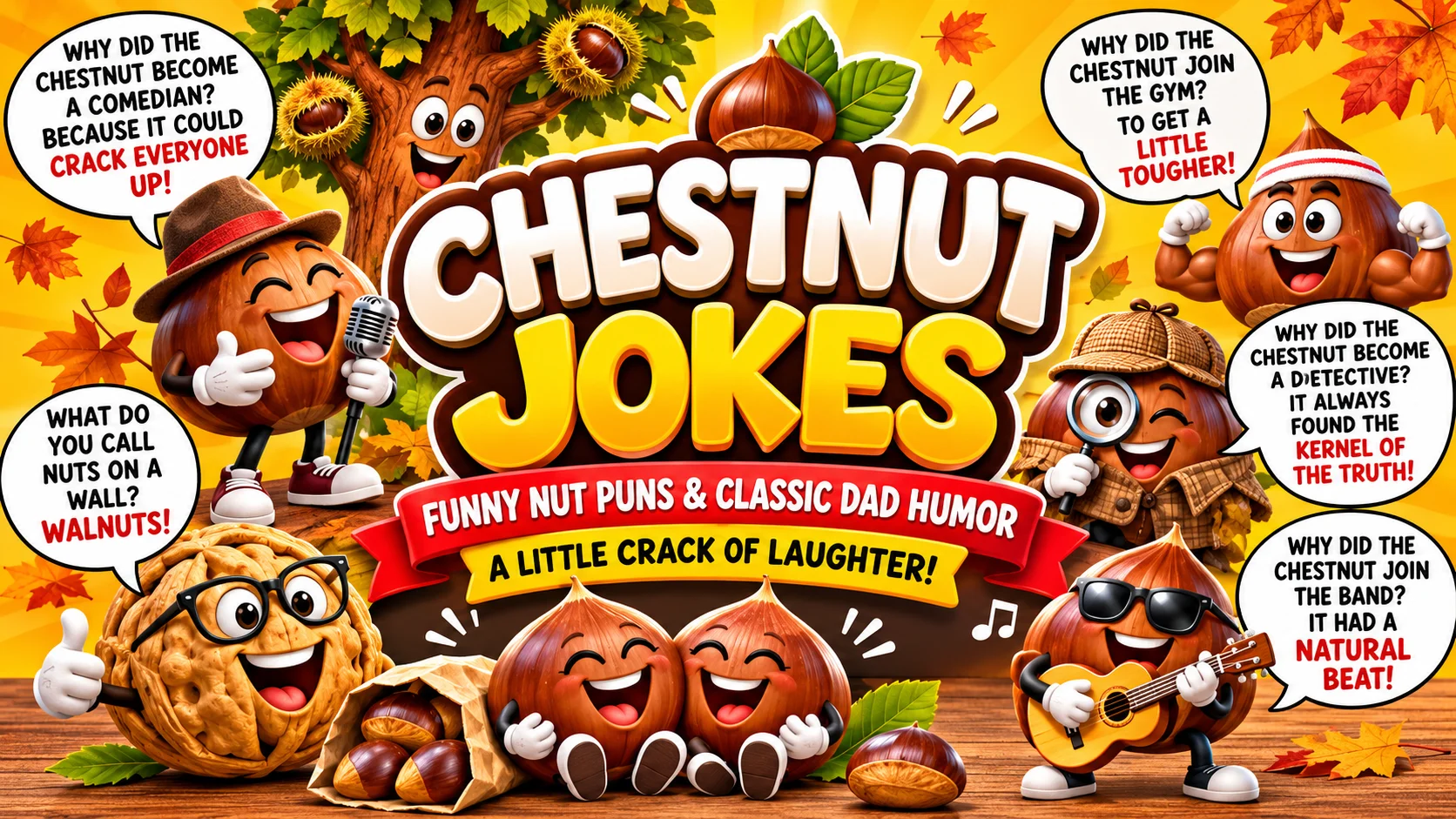
Chestnut jokes have a special place in humor because the word chestnut can refer to both a familiar nut and an old joke that has been repeated so often that everyone knows the punchline. This double meaning makes chestnuts perfect for playful wordplay, nut-themed riddles, and classic dad jokes. From silly walnut comparisons to jokes about roasted chestnuts and chestnut trees, there are plenty of ways to turn this humble nut into a source of laughter. Sometimes the funniest part of a chestnut joke is knowing exactly what is coming and laughing anyway.
In this collection, you will find funny chestnut jokes, short nut puns, clean one-liners for kids, and explanations of the phrase that old chestnut. You will also discover walnut jokes, jokes about stale punchlines, and playful references to the popular nuts on the wall riddle. Whether you are looking for a joke to share with friends, a caption for an autumn photo, or a classic dad joke that earns an affectionate groan, these chestnut jokes offer a fresh handful of humor.
Funny Chestnut Jokes for Nut Lovers
Chestnuts may be small, but they offer plenty of material for wordplay. Their name sounds playful, they grow on trees, and they can be roasted as a seasonal snack. These familiar features make them easy to imagine as characters with jobs, hobbies, and exaggerated personalities. A simple chestnut joke can turn an ordinary nut into a comedian, a detective, or a very serious tree enthusiast.
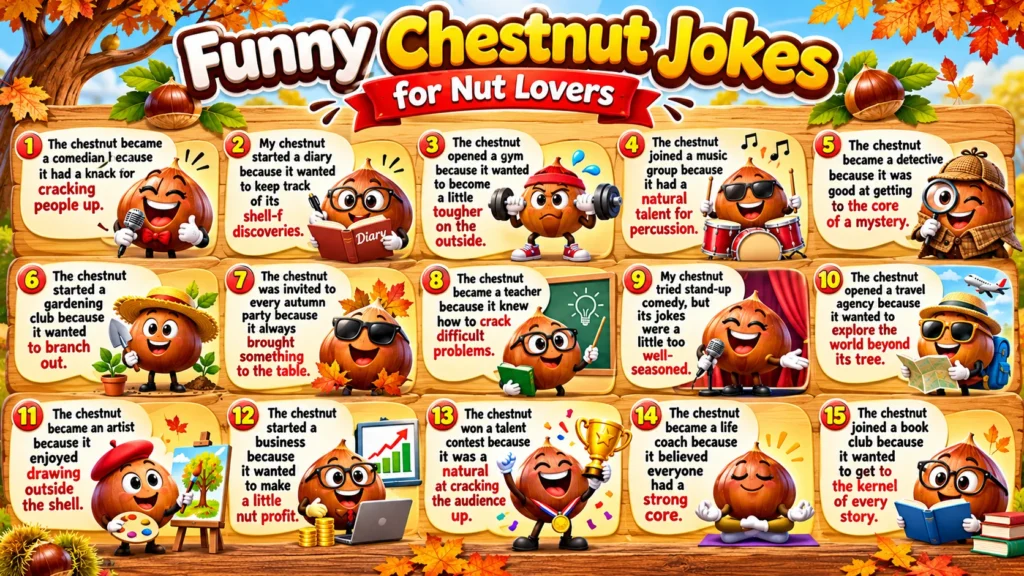
The following jokes are written as direct punchlines, making them easy to share at family gatherings, autumn parties, or casual conversations. They use clean humor that works for children and adults alike. Some are about chestnuts themselves, while others play with the wider world of nuts and the expressions associated with them.
- The chestnut became a comedian because it had a knack for cracking people up.
- My chestnut started a diary because it wanted to keep track of its shell-f discoveries.
- The chestnut opened a gym because it wanted to become a little tougher on the outside.
- The chestnut joined a music group because it had a natural talent for percussion.
- The chestnut became a detective because it was good at getting to the core of a mystery.
- The chestnut started a gardening club because it wanted to branch out.
- The chestnut was invited to every autumn party because it always brought something to the table.
- The chestnut became a teacher because it knew how to crack difficult problems.
- My chestnut tried stand-up comedy, but its jokes were a little too well-seasoned.
- The chestnut opened a travel agency because it wanted to explore the world beyond its tree.
- The chestnut became an artist because it enjoyed drawing outside the shell.
- The chestnut started a business because it wanted to make a little nut profit.
- The chestnut won a talent contest because it was a natural at cracking the audience up.
- The chestnut became a life coach because it believed everyone had a strong core.
- The chestnut joined a book club because it wanted to get to the kernel of every story.
What Does That Old Chestnut Mean?
The phrase that old chestnut refers to a joke, story, or remark that has been repeated so often that it feels familiar or predictable. It is usually used when someone tells a joke that the audience has heard many times before. The word chestnut in this expression does not simply refer to the edible nut; it describes an old, well-worn piece of humor.
The expression is useful when discussing classic dad jokes, familiar anecdotes, and punchlines that continue to circulate because people enjoy them despite their age. Calling a joke an old chestnut can be affectionate rather than insulting. A familiar joke may still get a laugh because the audience enjoys the delivery, the shared memory, or the pleasure of anticipating the punchline.
Why Is an Old Joke Called a Chestnut?
The exact origin of the expression is debated, but one widely discussed explanation connects it with an old theatrical anecdote involving a repeatedly told story about a chestnut tree. The expression became associated with a story that was told so often that listeners could recognize it immediately. Over time, old chestnut came to mean a stale or overused joke or story.
Because the origin is not completely settled, it is best to describe the theatrical explanation as a commonly cited theory rather than a proven fact. The phrase is now widely understood in English, especially when someone wants to point out that a joke or story is not new.
Examples of That Old Chestnut in Conversation
- The joke about the chicken crossing the road is that old chestnut again.
- My uncle told that old chestnut about the forgetful farmer for the third time.
- We all knew the punchline, but the old chestnut still made us smile.
- The comedian gave an old chestnut a fresh twist with a new ending.
- That story about the missing wallet is an old chestnut in our family.
Jump into Other Related Article
- Moose Jokes | Funny Moose Jokes, Puns, Dad Jokes & One-Liners
- Bull Joke | Funny Bull Jokes, the Young and Old Bull Story, and More
- Banana Split Joke | Funny Jokes, Dad Jokes, Puns, and Variations
Chestnut Dad Jokes That Are Corny in the Best Way
Chestnut dad jokes rely on simple puns and predictable punchlines. They often use words such as crack, shell, nutty, and kernel to connect nuts with familiar expressions. These jokes are especially effective when delivered with a straight face, as if the punchline is a serious observation rather than a deliberately silly one.
The examples below are suitable for lunchbox notes, family conversations, autumn celebrations, and anyone who appreciates gentle humor. They are short enough to remember and easy to adapt into your own nut-themed jokes.
- The chestnut never gets nervous because it knows how to keep its shell together.
- My chestnut became a motivational speaker and told everyone to stay strong at the core.
- The nut joined a debate club because it wanted to crack the toughest arguments.
- The chestnut was a great friend because it never left anyone feeling shellfish.
- The chestnut joined a choir because it had a nutural talent for singing.
- The nut became a teacher because it was good at cracking complicated questions.
- The chestnut went to work early because it wanted to get a head start on the season.
- The chestnut became a detective because it always followed the trail to the kernel of the truth.
- The nut started a podcast because it had plenty of crunchy opinions.
- The chestnut entered a race but stopped to admire the trees along the way.
Walnut and Chestnut Jokes: Two Nuts, Twice the Fun
Walnuts and chestnuts may both be nuts, but they have different textures, appearances, and uses in cooking. That makes them a good pair for jokes about friendly competition, teamwork, and the differences between two characters who have more in common than they realize. Walnut jokes can also use the word wall, while chestnut jokes can play on the word chest or the expression old chestnut.
These jokes are clean and simple, making them suitable for family meals, food-themed captions, and casual conversations. The focus is on wordplay rather than factual claims about the nuts themselves.
- The walnut challenged the chestnut to a contest, but both cracked up before the first round.
- The chestnut and walnut started a business because they made a solid pair.
- The walnut became a detective because it was always looking for the missing piece.
- The chestnut invited the walnut to a party because it wanted to have a nutty good time.
- The walnut liked puzzles because it enjoyed thinking outside the shell.
- The chestnut and walnut opened a café where every snack came with a crunchy punchline.
- The walnut became a builder because it knew how to work around a wall.
- The chestnut joined a book club, while the walnut preferred to think things through.
- The two nuts started a band and called themselves The Shell Tones.
- The walnut told an old chestnut joke, and the chestnut said it had heard that one before.
The Nuts on the Wall Joke Explained
One familiar nut joke asks what you call nuts on a wall. The classic punchline is walnuts, because the word sounds like wall nuts. It is a simple sound-alike joke that depends on combining two ordinary words into the name of a familiar nut.
This type of joke is popular because the setup sounds like a straightforward question, while the answer changes how the listener interprets the words. It is easy for children to understand and works well as a short dad joke. The punchline can also be adapted into other jokes about nuts, walls, and household objects.
Funny Variations on the Wall-Nut Joke
- Two nuts hanging on a wall are walnuts.
- A nut that enjoys decorating a wall might be a walnut enthusiast.
- The walnut became an interior designer because it had a good eye for wall space.
- The nuts started a home-improvement business because they were experts at sticking to the wall.
- The walnut opened a gallery because it wanted to hang around with art.
These variations build on the familiar sound of walnut and wall nut. They are playful alternatives rather than separate traditional riddles.
Roasted Chestnut Jokes and Autumn Humor
Roasted chestnuts are associated with cool weather, seasonal markets, and cozy autumn or winter gatherings. Their warm aroma and crunchy shell make them a natural subject for jokes about cold days, snacks, and staying warm. These jokes work well for fall festivals, holiday captions, seasonal menus, and conversations around a fire.
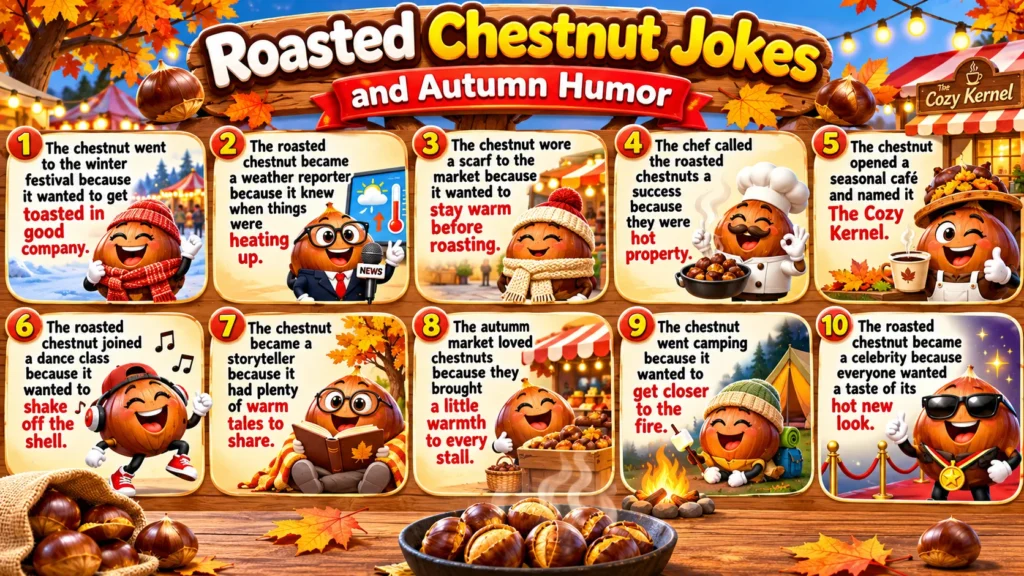
The humor in this section focuses on the experience of roasting and eating chestnuts. The jokes are lighthearted and suitable for general audiences, whether you enjoy chestnuts as a snack or simply like autumn-themed wordplay.
- The chestnut went to the winter festival because it wanted to get toasted in good company.
- The roasted chestnut became a weather reporter because it knew when things were heating up.
- The chestnut wore a scarf to the market because it wanted to stay warm before roasting.
- The chef called the roasted chestnuts a success because they were hot property.
- The chestnut opened a seasonal café and named it The Cozy Kernel.
- The roasted chestnut joined a dance class because it wanted to shake off the shell.
- The chestnut became a storyteller because it had plenty of warm tales to share.
- The autumn market loved chestnuts because they brought a little warmth to every stall.
- The chestnut went camping because it wanted to get closer to the fire.
- The roasted chestnut became a celebrity because everyone wanted a taste of its hot new look.
Chestnut Tree Jokes and Nature Puns
Chestnut trees offer a different angle for nut humor because they bring in leaves, branches, roots, and the changing seasons. Tree-related wordplay can turn a chestnut into a gardener, a nature lover, or a character who spends all day branching out into new interests. These jokes work well for nature-themed activities, classroom humor, autumn walks, and garden captions.
The following examples use tree-related expressions in playful ways. They remain clean and accessible for readers of different ages.
- The chestnut tree became a comedian because its jokes were rooted in good humor.
- The chestnut tree started a business because it wanted to branch into new markets.
- The tree joined a book club because it wanted to turn over a new leaf.
- The chestnut tree was a good listener because it always stood its ground.
- The gardener trusted the chestnut tree because it had deep roots.
- The chestnut tree joined a music group because it had plenty of natural branches.
- The tree became a teacher because it knew how to help young ideas grow.
- The chestnut tree was invited to the party because it always brought shade and character.
- The tree started a travel journal because it wanted to put down roots in new places.
- The chestnut tree became a mentor because it had years of experience standing tall.
Conclusion
Chestnut jokes combine nut-themed wordplay with the familiar humor of classic dad jokes. From walnut puns and roasted chestnut one-liners to jokes about chestnut trees and the expression that old chestnut, there are plenty of ways to make this small nut the center of a laugh. The best examples are easy to remember, simple enough for children, and flexible enough to use in conversations, seasonal posts, or family gatherings.
Share a favorite chestnut pun with friends, use a walnut joke to start a conversation, or create your own punchline by playing with words such as crack, shell, and kernel. Even an old joke can still be entertaining when it is told at the right moment. After all, a classic chestnut may be familiar, but a fresh delivery can make it feel funny all over again.
What is a chestnut joke?
A chestnut joke can be a joke about the nut itself or an example of an old chestnut, meaning a joke or story that has been repeated many times. The double meaning makes chestnuts a useful subject for wordplay and classic dad jokes.
What does that old chestnut mean?
That old chestnut describes a joke, story, or remark that is familiar because it has been repeated so often. It is often used affectionately when someone tells a well-known joke that the audience already recognizes.
What is the joke about nuts on the wall?
The classic punchline is walnuts. It sounds like wall nuts, so the joke combines the idea of nuts on a wall with the name of a familiar nut.
Are chestnut jokes suitable for kids?
Yes. Chestnut jokes can use simple words such as shell, crack, tree, and nut to create clean punchlines. The wall-nut joke is particularly easy for children to understand.
What are some funny chestnut puns?
Examples include The chestnut became a comedian because it had a knack for cracking people up and The chestnut tree started a business because it wanted to branch out. Both use familiar expressions in a nut-related context.
What is the difference between a chestnut joke and an old chestnut?
A chestnut joke can be any joke about chestnuts, while an old chestnut is an expression for a joke or story that has been told many times. One refers to a subject; the other describes how familiar a joke has become.
What are some walnut and chestnut jokes?
Walnut and chestnut jokes often compare the two nuts as if they were friends or rivals. For example, The walnut challenged the chestnut to a contest, but both cracked up before the first round.
Why is a joke called an old chestnut?
The origin of the expression is debated. One commonly cited theory connects it with a repeatedly told theatrical anecdote about a chestnut tree. Today, the phrase means a joke or story that has become very familiar through repetition.
How can I write an original chestnut joke?
Start with a nut-related word such as shell, crack, kernel, or walnut. Connect it to a familiar expression or imagine the chestnut doing something unexpected. A short setup and clear punchline usually make the joke easier to understand.