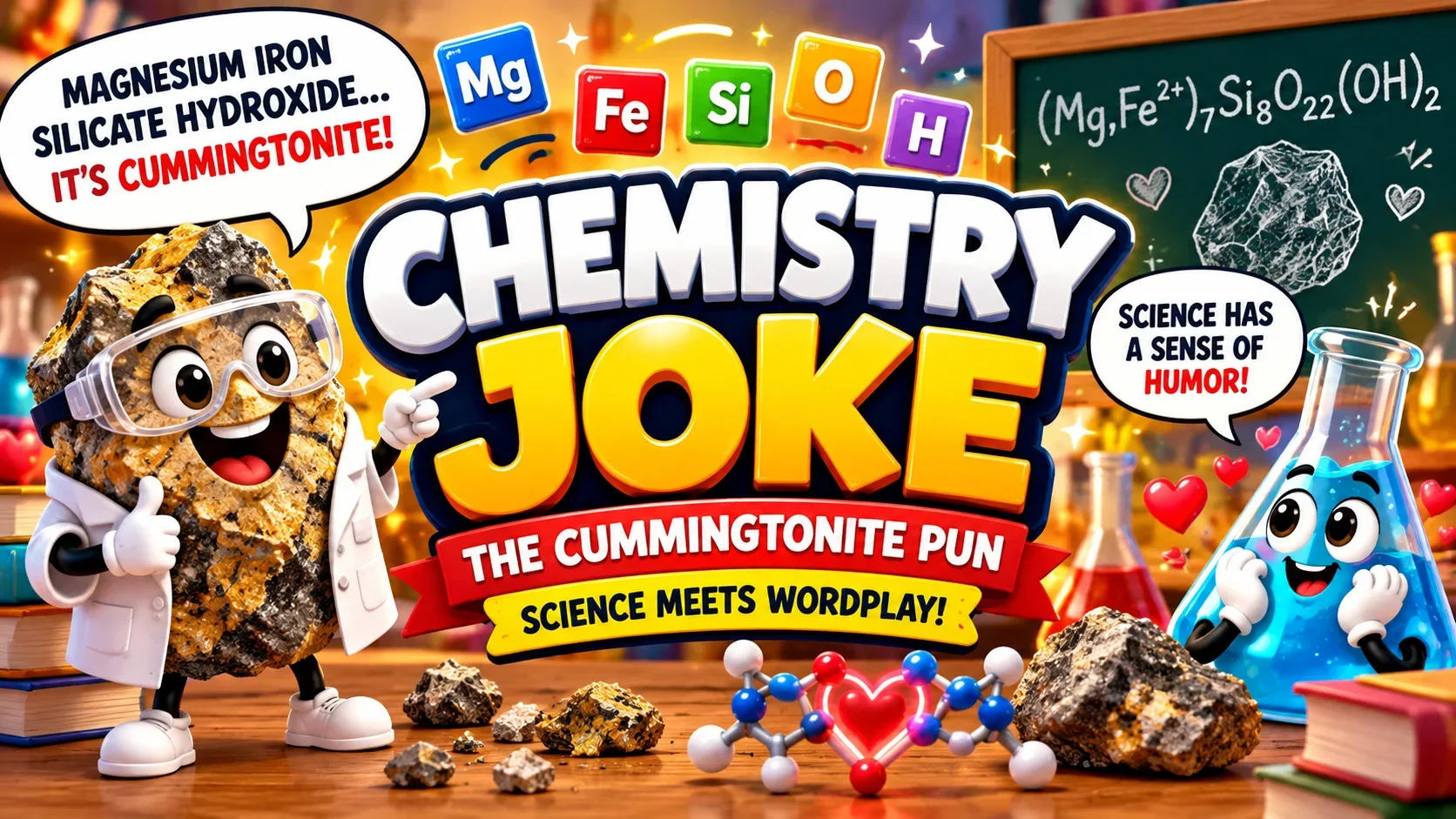
The magnesium iron silicate hydroxide joke explained is a chemistry-themed wordplay joke that combines a scientific mineral name with a humorous romantic meaning. At first, magnesium iron silicate hydroxide sounds like a complicated chemical description, but the joke becomes clearer when you connect it to the mineral called cummingtonite. The humor comes from the way the mineral’s name sounds to English speakers, making it a popular subject for chemistry jokes and cheeky pickup lines.
This joke is especially interesting because it connects real mineralogy with everyday language. Instead of relying on a typical romantic phrase, it uses a scientific term to create an unexpected double meaning. Understanding the joke requires knowing what cummingtonite is, how its name relates to the chemical description, and why the word can sound suggestive. Let’s break it down in simple language.
What Is the Magnesium Iron Silicate Hydroxide Joke?
The joke refers to cummingtonite, a real mineral whose name can sound suggestive in English. Cummingtonite is an amphibole mineral associated with magnesium, iron, silicate, and hydroxyl components. Its name makes it an amusing choice for chemistry-themed humor, particularly when used in a flirtatious pickup line.
The humor works because a technical mineral name unexpectedly resembles a suggestive expression. Someone may introduce the mineral in a chemistry conversation and then use its name as a playful romantic reference. The scientific wording creates a moment of surprise, while the double meaning provides the punchline.
- Scientific connection: Cummingtonite is a genuine mineral, not an invented chemical for the joke.
- Wordplay: Its name resembles a suggestive English expression.
- Pickup-line humor: The mineral’s name can be used in a cheeky attempt at flirting.
- Audience: The joke is especially understandable to people familiar with chemistry, geology, or mineral names.
The key is recognizing that the joke depends on pronunciation and interpretation rather than on a chemical reaction or scientific experiment.
What Does Cummingtonite Mean in the Joke?
Cummingtonite is a mineral belonging to the amphibole group. Its chemical formula is commonly written as \((Mg,Fe^{2+})_2(Mg,Fe^{2+})_5Si_8O_{22}(OH)_2\), showing that magnesium and iron can both be part of its composition. It is a real geological material, not a word created specifically for a meme.
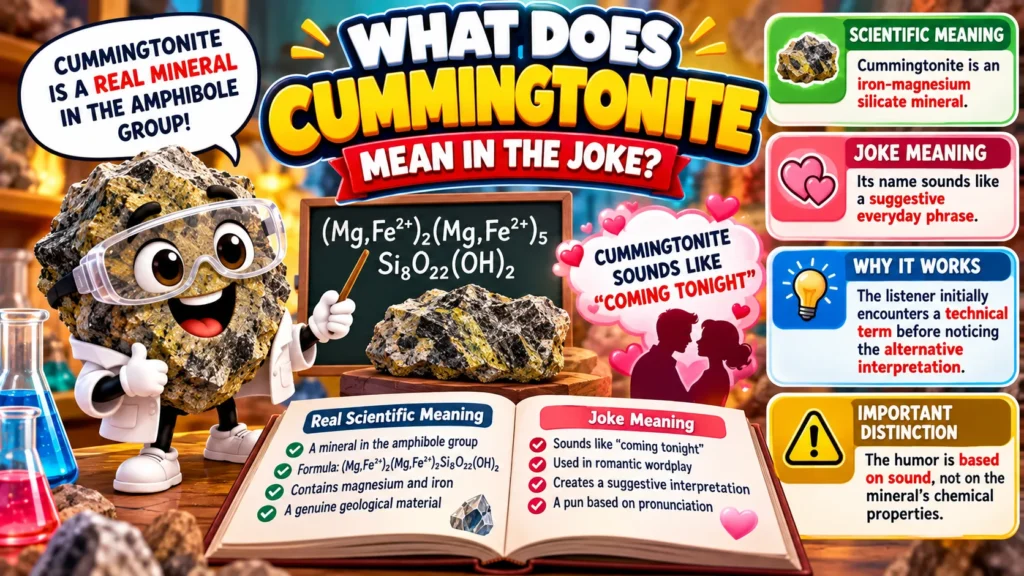
The joke comes from how the word cummingtonite can be heard as a phrase resembling coming tonight. The similar sound gives the mineral name a suggestive interpretation, especially when someone uses it in a romantic context. The word’s actual scientific meaning, however, is unrelated to that innuendo.
Here is the difference:
- Scientific meaning: Cummingtonite is an iron-magnesium silicate mineral.
- Joke meaning: Its name sounds like a suggestive everyday phrase.
- Why it works: The listener initially encounters a technical term before noticing the alternative interpretation.
- Important distinction: The humor is based on sound, not on the mineral’s chemical properties.
This contrast between scientific terminology and everyday speech is what makes the joke memorable.
How Does the Magnesium Iron Silicate Hydroxide Pickup Line Work?
A popular version of the joke asks someone whether they like magnesium iron silicate hydroxide. The expected response may be confusion because the phrase sounds like a complicated chemistry topic. The punchline appears when the person discovers that the description points to cummingtonite.
For example:
- The setup: Hey, do you like magnesium iron silicate hydroxide?
- The reaction: What is that supposed to mean?
- The reveal: It’s cummingtonite!
- The hidden joke: The mineral’s name sounds like coming tonight.
Versions of this pickup line have appeared in online chemistry and humor discussions, including Reddit posts about the mineral’s name.
The line works best when the listener does not immediately recognize the mineral. If they already know the name, the surprise disappears, although the pun may still earn a laugh from someone who enjoys science humor.
Jump into Other Related Article
- Moose Jokes | Funny Moose Jokes, Puns, Dad Jokes & One-Liners
- Difference Between Pond and Lake Joke | Funny Answers, Puns & the Real Meaning
- Do You Like Dragons Joke | Funny, Clever & Imagine Dragons Joke Variations
Why Is the Cummingtonite Joke Popular?
Chemistry and geology often involve unfamiliar scientific names, formulas, and terminology. Sometimes these names accidentally resemble ordinary words or phrases, creating opportunities for jokes that are easy to share online.
The cummingtonite joke combines several elements that make scientific humor appealing:
- Unexpected wordplay: A mineral name becomes the punchline of a romantic joke.
- Scientific knowledge: Recognizing the mineral makes the joke more satisfying.
- Double meaning: The phrase has a legitimate geological meaning and a suggestive interpretation.
- Meme potential: A complicated chemical description creates curiosity and encourages people to search for the answer.
- Conversation starter: The joke can lead to discussions about mineral names, chemistry, and geology.
It is also an example of how technical knowledge can make a simple pun more entertaining. Someone who recognizes the mineral may understand the joke immediately, while another person might need the explanation first.
Similar Chemistry and Geology Jokes
If you enjoy the magnesium iron silicate hydroxide joke, other science-based pickup lines use chemical symbols, scientific concepts, or geological terminology to create similar humor.
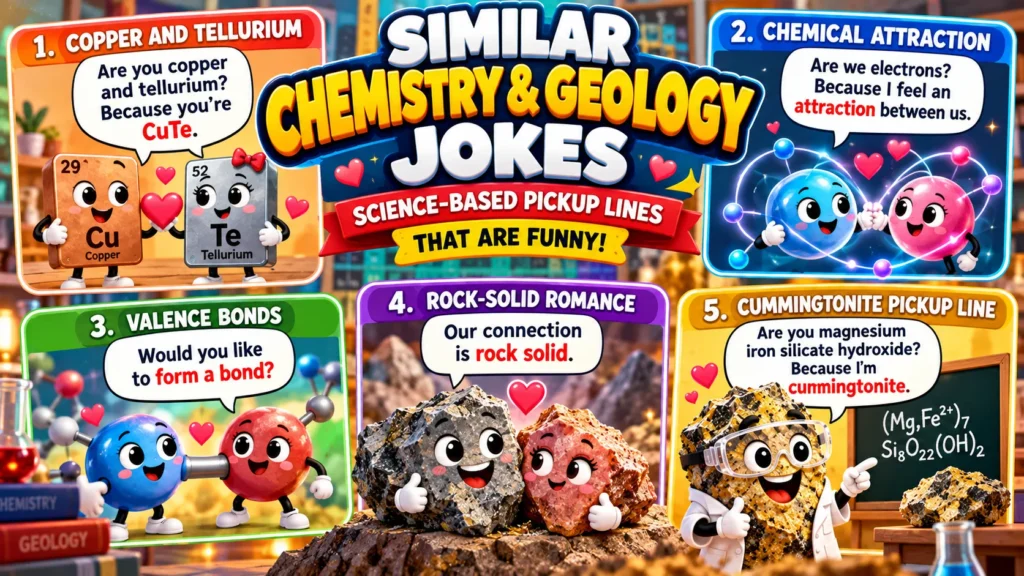
- Copper and tellurium: Are you copper and tellurium? Because you’re CuTe. The chemical symbols create a compliment when read aloud.
- Chemical attraction: Are we electrons? Because I feel an attraction between us. This uses a basic chemistry concept as romantic wordplay.
- Valence bonds: Would you like to form a bond? This connects chemical bonding with the idea of forming a relationship.
- Rock-solid romance: Our connection is rock solid. This combines geological language with a familiar expression.
- Cummingtonite pickup line: Are you magnesium iron silicate hydroxide? Because I’m cummingtonite. This uses the mineral’s name as the punchline.
These examples work because they turn scientific terms into familiar expressions. Like the original joke, their humor depends on the listener recognizing the connection.
Conclusion
The magnesium iron silicate hydroxide joke explained is a playful example of chemistry and geology wordplay. The phrase refers to the mineral cummingtonite, an iron-magnesium silicate hydroxide whose name sounds like coming tonight. That resemblance creates the suggestive punchline used in online jokes and chemistry-themed pickup lines.
Although the joke may initially seem confusing, its meaning becomes clear once you understand the mineral behind it. The humor comes from the difference between a legitimate scientific term and the phrase it resembles. It is a simple reminder that even technical subjects can inspire memorable puns.
1. What is the magnesium iron silicate hydroxide joke?
It is a chemistry-themed pun about cummingtonite, a real mineral. Its name sounds similar to coming tonight, giving it a suggestive double meaning.
2. What is magnesium iron silicate hydroxide called?
It commonly refers to cummingtonite, an iron-magnesium silicate hydroxide mineral in the amphibole group. Its chemical formula is \((Mg,Fe^{2+})_7Si_8O_{22}(OH)_2\).
3. Why is cummingtonite considered funny?
Its name resembles a suggestive English phrase when spoken aloud. The contrast between the scientific mineral name and its alternative interpretation creates the humor.
4. Is cummingtonite a real mineral?
Yes. Cummingtonite is a genuine mineral studied in mineralogy and geology. Its name is used in the joke because of how it sounds, not because of any humorous scientific property.
5. How do you use the magnesium iron silicate hydroxide pickup line?
You can ask someone, Do you like magnesium iron silicate hydroxide? and reveal that it is cummingtonite. The joke depends on the listener recognizing the phrase’s suggestive sound, so it works best with someone who enjoys cheeky science humor.